
How to Reduce Your Cape Town Property’s Wildfire Risk During El Niño
21 September 2026
Sign up for bespoke property market updates here
Most Cape Town homeowners know wildfire season is coming, and fewer know how much of the preparation sits with them.
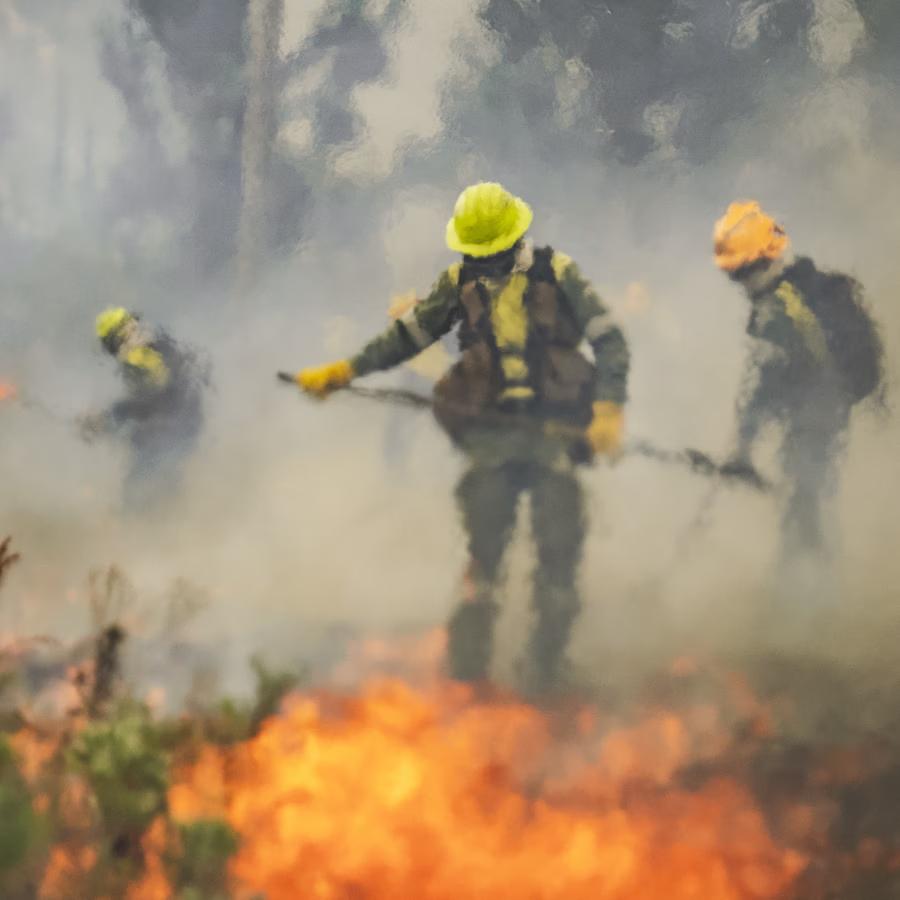
With El Niño expected to persist into the summer, the Western Cape Government has warned of higher temperatures and a longer wildfire season, and the province's traditional four-month fire season has effectively stretched to eight, running from October this year through to May 2027. To help you prepare for it, we have partnered with the Cape Peninsula Fire Protection Association (CPFPA) and NCC Environmental Services (NCC-Group) for our Wildfire Awareness Campaign.
So what is integrated wildfire management?
Fire belongs in fynbos, and it is how the vegetation regenerates; what has changed is that our neighbourhoods now sit right up against it, and the damage a wildfire causes can depend heavily on the work done long before it starts. Rather than waiting for a wildfire and then fighting it, the whole cycle is managed, before, during and after, which the CPFPA sets out as five stages (The Five R’s; read more about it at the CPFPA).
Response takes place while a wildfire is burning; the other stages happen before or after the fire. Risk Reduction is where a property owner has the most influence, and what that asks of you depends on where you live.
If your property borders open vegetation:
- Defensible space: clear a managed buffer of at least 20 metres around any buildings, keeping grass short, dead material raked up, and firewood and fuel well away from the walls;
- Ladder fuels: prune lower branches to about two metres off the ground and keep a two metre gap between the roof and anything overhanging it, so a fire cannot climb into the canopy;
- Alien vegetation: clear pines, eucalyptus and wattle wherever you can, since they carry far more fuel than fynbos and burn hotter and for longer;
- Access and firebreaks: make sure a fire engine can reach the property, turn and get out again, and keep a firebreak where your land meets open vegetation.
These are the CPFPA’s own guidelines, and their defensible space guide has the rest. Not all of it is a do-it-yourself job, and on apartments or estate common property it is the body corporate's or the homeowners' association's to do; for the heavier work, your CPFPA ward manager is the right person to ask.
If your property is well away from open vegetation and the mountain, a firebreak is generally unlikely to be necessary. Embers, rather than flames, are what usually reach buildings, so clearing your gutters and closing the gaps around roof spaces and vents is worth doing wherever you live. Fire danger ratings also apply right across the city, and on orange and red days no open-air fires are permitted anywhere, braais included. Should you spot a wildfire, City of Cape Town Fire & Rescue can be reached on 021 590 1900.
For larger holdings, the NCC-Group draws up Integrated Wildfire Management Plans for estates, developments and larger properties, mapping the risk areas on a property and setting out firebreak, equipment and planting guidance.
Wildfire season is part of living in this city, and preparing for it is something we can all do reasonably well, so while the months ahead may be long ones, they need not catch any of us unprepared.
___
Curious to know what your property could be worth in this 2026 selling season? Tap the button below to connect with a Quay 1 area specialist broker.
Looking to make a move?
Browse live Cape Town listings or get a free valuation from our team.
More insights
 Cape Town Community News
7 September 2026
Is your property ready for the El Niño wildfire season?
Sign up for bespoke property market updates here
 Cape Town Community News
18 May 2026
Beautifying Newlands: Quay 1 & the Kildare Circle
Sign up for bespoke property market updates here
 Cape Town Community News
11 May 2026
Help Us Bring Warmth to Those in Need This Winter
Sign up for bespoke property market updates here